In the grand picture of equipment manufacturing industry, forged parts are the "industrial backbone" that constitutes heavy machinery, aerospace, automotive power and other fields. And the starting point of all of this is an unremarkable forging blank. It is not an ordinary raw material, but a carefully designed and prepared "reserve" that plays an irreplaceable foundational role in the "metal shaping art" of forging. Its profound and crucial role is mainly reflected in the following aspects:
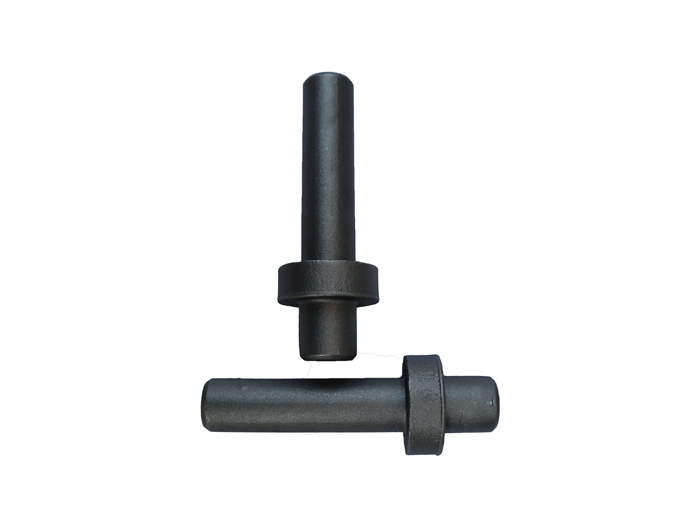
1、 The source of quality: laying the foundation for the internal structure of forgings
This is the fundamental and core role of forging blanks.
Inheriting excellent genes: Forging blanks are usually made by rolling or forging large steel ingots, which have undergone preliminary plastic deformation, eliminating some defects in the as cast structure (such as looseness and porosity), and refining the grain size. This provides a more uniform and dense "high-quality embryo" for subsequent forging forming.
Ensure streamline integrity: During the forging process, the metal streamline will be continuously distributed along the shape of the mold cavity. A high-quality billet has continuous metal flow lines inside. Starting from this, the forging can form a complete and reasonable streamline, thereby greatly improving the fatigue strength, stress corrosion resistance, and isotropic mechanical properties of the parts. If there are defects in the billet itself, the flow line will be interrupted, becoming a hidden danger of product failure.
2、 The foundation of craftsmanship: the key to ensuring a smooth forging process
The billet is the material basis for process execution, and its state directly determines the efficiency and success of production.
Accurate volume control: The volume of the billet must be accurately calculated to match the sum of the volumes of the forging and flash. If the volume is too small, it will cause insufficient filling of the mold cavity, resulting in "meat shortage" waste products; If the volume is too large, it will lead to excessive flying edge thickness, which not only wastes materials and increases mold load, but also may affect the filling of deep cavities with metal due to excessive resistance.
Reasonable shape design: The shape of the billet (such as circular, square, or pre formed) needs to be conducive to positioning and initial upsetting in the mold, ensuring that the metal can flow smoothly and without folding into every corner of the mold cavity. A well-designed billet shape can effectively reduce forging defects, lower the required force for forming, and improve the lifespan of the mold.
Stable heating performance: The billet needs to be uniformly heated to a specific forging temperature. The uniformity of its material determines the consistency of the core surface temperature after heating. Uniform heating ensures that the metal has good plasticity during forging, low flow resistance, and can easily fill complex cavities, while avoiding internal stress cracking caused by excessive temperature differences.
3、 Economic Scale: Core Factors Influencing Production Costs and Efficiency
In industrial production, the selection and preparation of raw materials are directly related to economic benefits.
The determining factor of material utilization rate: As mentioned earlier, accurate billet size is the key to improving material utilization rate. By optimizing the billet, it is possible to minimize burrs and process waste, achieving "lean manufacturing", which is particularly important in today's high raw material costs.
The correlation between production pace and energy consumption: A uniformly sized and uniformly heated billet can ensure stable and rapid forging production, reducing downtime caused by adjustments, scrap, or mold damage. Meanwhile, optimized billets mean less heating energy consumption and forging strikes, thereby reducing overall production costs.
Indirect guarantee of mold lifespan: The rationality of the volume and shape of the billet avoids overloading, eccentric loading, and abnormal wear of the mold. Uniformly heated billets also reduce thermal impact on the mold cavity, effectively extending the service life of expensive molds.
4、 The Beginning of Performance: Potential Factors Affecting Product Reliability
The inherent deficiencies of the billet are often difficult to fully compensate for through subsequent forging processes.
The inheritance and amplification of defects: Defects such as microsegregation, non-metallic inclusions, or microcracks present in the billet may not be eliminated under the enormous pressure and high temperature of forging, but may be flattened and elongated, becoming penetrating macroscopic defects that seriously damage the mechanical properties and reliability of the product. This is fatal in safety demanding fields such as aerospace.
The starting point of consistency: For key components such as connecting rods and crankshafts in mass-produced automotive engines, the uniformity of the chemical composition and microstructure of each blank is the fundamental prerequisite for ensuring highly consistent performance of thousands of forgings.
summary
In summary, forging blanks are not passive, waiting to be shaped metal blocks. It is the "living organism" carrying the quality gene, the "passport" for smooth process execution, the "key valve" for cost control, and the "starting guarantee" for superior product performance.
In the journey of becoming a manufacturing powerhouse, emphasizing the quality of forging blanks is the foundation of valuing industrial products. Just as a towering building begins with its foundation, all powerful and precise forging parts begin with a high-quality billet that has been carefully selected and prepared. It may be unknown, but it holds significant importance.


