Coupling bolts are high-strength fasteners specifically used in coupling components. It is far from an ordinary screw or bolt, but a crucial core load-bearing component in the power transmission system.
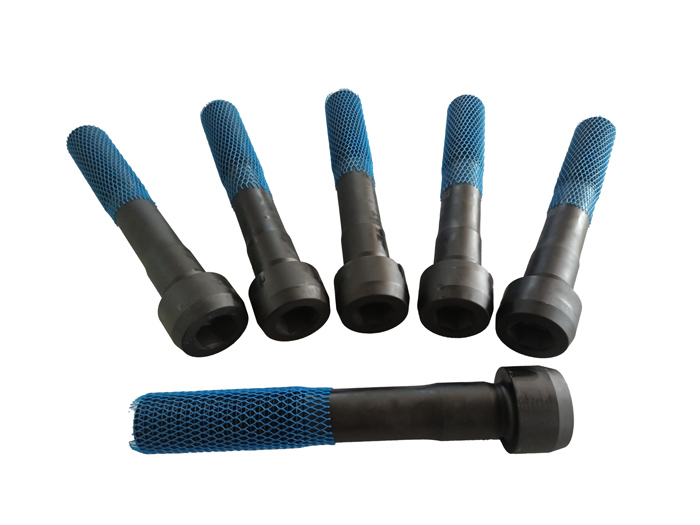
1、 Core purpose: To achieve power connection and transmission between two axes
The core purpose of coupling bolts is to firmly connect the power shaft of the driving side such as motors and reducers with the working shaft of the driven side such as pumps and fans, forming a whole and reliably transmitting torque and rotational motion.
2、 Core functions
Main function: Accurate transmission of torque
The bolt bears the torsional shear force transmitted from the drive shaft and transfers this torque to the driven shaft without reservation. Its shear strength and preload directly determine the large torque that the coupling can transmit.
Key function: Generate sufficient bonding surface pressure
By applying the prescribed pre tightening force, the bolt tightly presses the two halves of the coupling together. The enormous frictional force on the joint surface is the fundamental guarantee for resisting torque and preventing relative sliding between the two halves.
Positioning and centering function
For some couplings that rely on bolts to achieve both force transmission and alignment (such as flange couplings), the bolts and hinge holes are precisely matched to provide precise radial positioning, capable of withstanding certain radial forces and bending moments, and assisting in maintaining the alignment accuracy of the two shafts.
Security guarantee function
As one of the weak mechanical links in the coupling (intentionally designed), when the equipment experiences severe overload, the coupling bolts will first undergo shear fracture. This' sacrificial 'damage can protect the coupling body and the more expensive motors and equipment behind it from catastrophic damage.
In summary, coupling bolts are far from ordinary fasteners. It integrates four functions: power transmission, compression fixation, precise positioning, and overload protection, and is the core element to ensure the efficient, stable, and safe operation of the entire transmission system.


